
Norman County Arrest Reports Over Time
No Norman County or NWRCC source posts a running 72-hour, seven-day, or weekly arrest log. Start with the TCCC Local Inmate Roster, the official tool. Just know what it is. Each attached PDF shows who sat in NWRCC custody at one moment. It is not a sequence of arrest events. A single row can involve Norman, Polk, or Red Lake County. It may also reflect a state-contract hold. Or it may flag a warrant from another jurisdiction entirely. The roster also lacks a standard arrest-location or arresting-agency column. Treat each dated PDF as one piece of the puzzle. Before requesting more records, pin down the likely agency. Also set the date range you care about.
Build a Norman County Date-Range Search
Because no official blotter exists, build the history from sources whose limits are clear:
- Open the current TCCC roster landing page and record the attachment date and timestamp.
- Check any dated official PDF you already possess, but do not assume missing dates form a complete archive.
- Ask TCCC/NWRCC or the originating sheriff or police agency for existing public booking and incarceration records covering a defined range.
- Check MCRO for later case context, recognizing that pending criminal cases cannot always be found by defendant name.
- Use local news only for incident leads and narrative context, not a total booking count.
For the freshest look at who got arrested, start with the Arrested Today page. The wider Norman County hub also helps, since it spells out how jail custody, an arrest record, and a court case differ.
Fields in a Regional Arrest Report
Roster fields stay lean, so read only what the PDF actually gives you.
| Field | Careful reading |
|---|---|
| Inmate photo | May show a booking image; blank cells do occur. |
| Incarceration date | Facility label, not a guaranteed arrest date or exact booking time. |
| Date of birth | Useful identity check when names are similar. |
| Controlling charge | Current charge or hold label, not a full case history or finding of guilt. |
| PDF timestamp | Time the snapshot was produced, not the time of each arrest. |
One January 15, 2026 sample was timestamped 9:50:03 a.m. It spanned 15 pages and held 114 regional rows. That single observation proves no daily posting time, no future row count, and no Norman-only total.
Weekend Reports May Arrive Later
The roster page promises updates Monday through Friday morning. Weekends and holidays get no refresh. So expect a gap after any non-update day. TCCC does not guarantee that every weekend booking shows up Monday or within a set number of hours. A person may be released or transferred before the next snapshot posts. For urgent status questions, call NWRCC at 218-470-8100. Or try Minnesota VINE if the record is searchable there. For the arrest report itself, contact the originating agency. Court Administration handles court-date questions. The facility roster never displays a final case outcome.
Request Reports Past the Online Window
A replaced roster attachment or a 404 does not mean the booking record was destroyed. Minnesota's Records Disposition Panel explains the rule. Agencies preserve or dispose of official records under approved schedules. No current Norman County or TCCC schedule controls the point. It fixes no term for how long NWRCC roster PDFs or booking photographs stay online. A good request asks for public booking and incarceration records for a specific date range. Name the fields you want: name, incarceration date, controlling charge, any public booking photograph, booking or release identifier, originating agency, and any public release field. Ask which fields are not maintained and which approved schedule controls them. Do not demand that an agency build a new historical database. The state records guidance shown here explains why. Online availability and legal retention are two different questions.
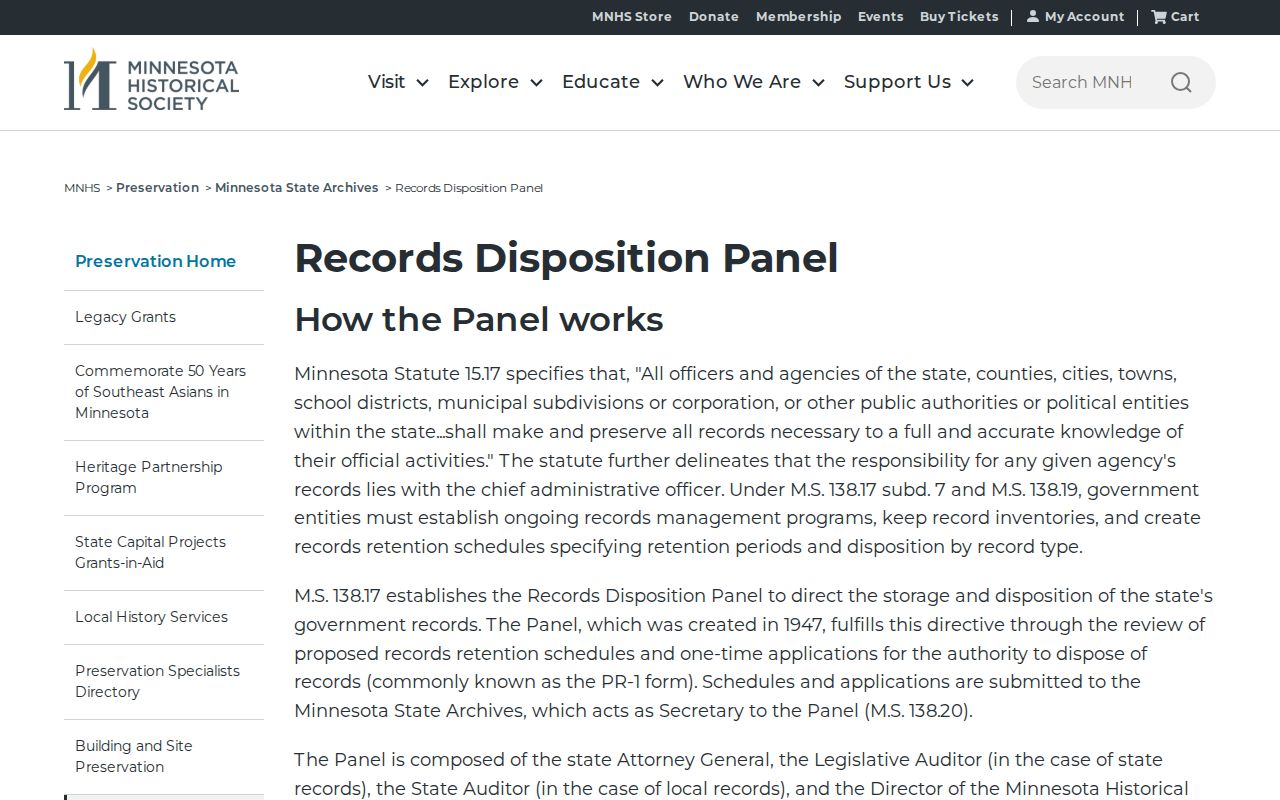
The relevant custodian should identify the schedule for the precise record requested.
Unofficial Archive Indexes Need Checks
A third-party roster wrapper can help you find the name of a replaced PDF. But it can omit pages, mislabel dates, or hold stale material. Official TCCC records stay primary. No commercial or unofficial source proves current custody. It cannot confirm charge status or disposition either. The unofficial Norman roster index captured here is useful only as a possible archive lead.
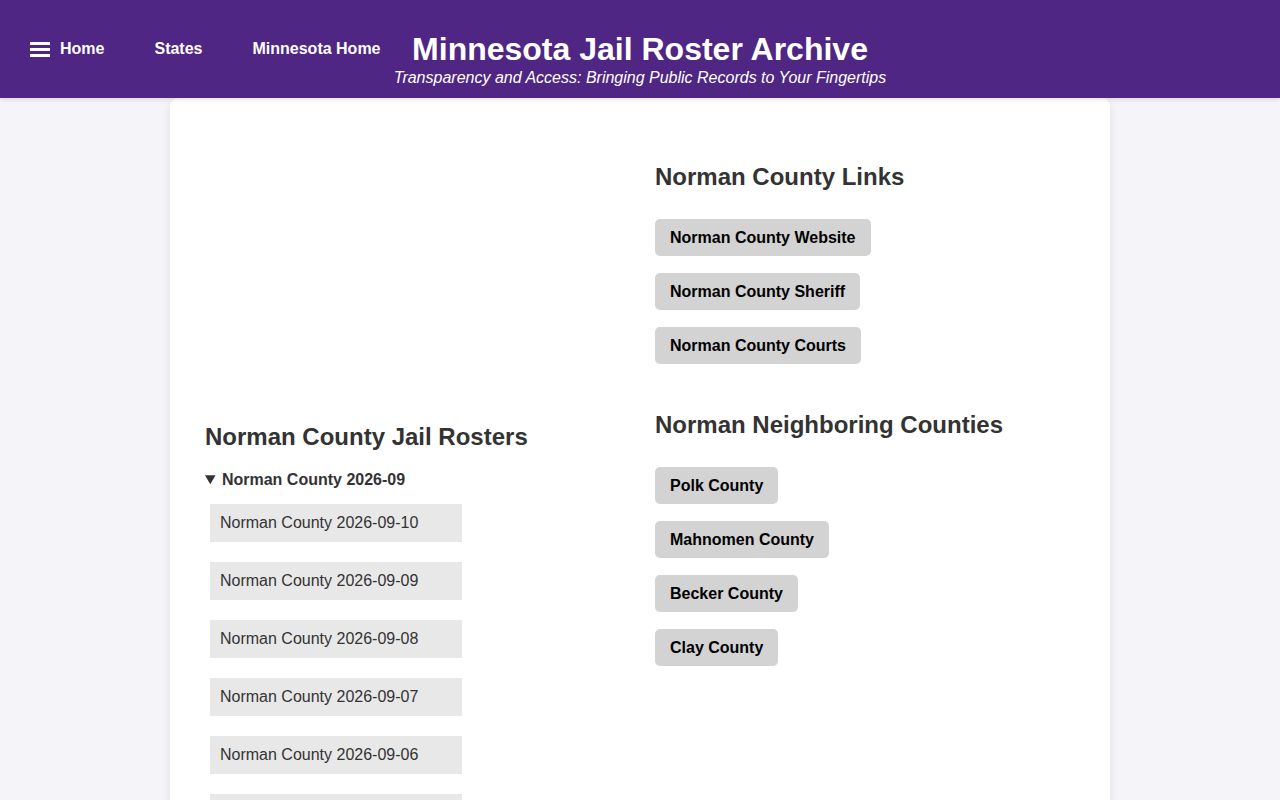
Check any dated link against TCCC first, and confirm its source date before you rely on it.
Norman County News Is Selective
For historical newspaper research, the Norman County Index is the strongest local route. The Minnesota Historical Society lists it as a weekly Ada paper dating to 1883. Post-1977 issues carry access limits through the Gale Family Library. A separate Minnesota News directory reports a Tuesday publication schedule. The paper works well for locating a reported incident. It cannot reconstruct every arrest in a given week. The Minnesota Historical Society newspaper page shown here documents the publication history. It also explains archive access.
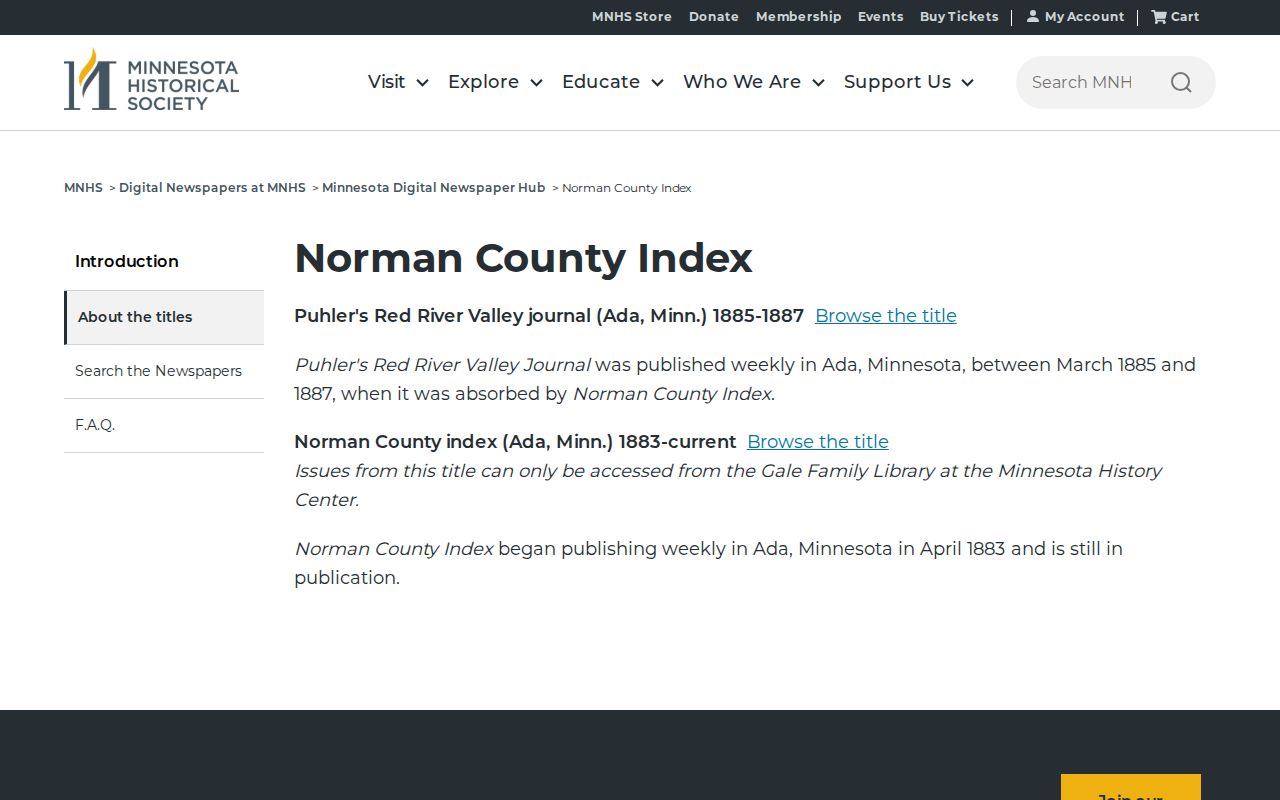
The archive may supply names, dates, and narrative leads. These are worth checking against agency records and court documents. Valley News Live and WDAY Radio have carried occasional regional stories. Some involve Norman County arrests or law-enforcement activity. Grand Forks Herald coverage may add regional follow-up. None of these outlets functions as a complete booking log. A news photograph is not an official booking image. Label nothing as one. Record the story date and publication, then verify the event with its originating agency.
Court Records Add Later Context
Minnesota Court Records Online adds another layer. It cannot replace a booking record. A search there can surface case filings and disposition details for a public case. One limit matters. A pending criminal case may not be searchable by defendant name until conviction. A missing name result proves nothing. An arrest or a case can exist anyway. Digging works better with a case number, citation number, attorney name, or county filter. A courthouse terminal also works.
Norman County District Court sits at 16 3rd Avenue East in Ada and lists 218-415-7090 as its main phone. TCCC's FAQ points court-date questions to Court Administration rather than the jail. The roster and court file use different dates. An incarceration date can precede a filing, and a custody snapshot's charge label may differ from the charge prosecuted, so tie each date to its source label instead of collapsing booking, roster, filing, and disposition into one timeline.
Choose the Right Record Custodian
Norman County and TCCC take separate data-practices routes. Sheriff-created incident and arrest records go to the Sheriff's Office. An NWRCC roster snapshot, jail record, or facility-held booking photograph sits elsewhere. That request goes to TCCC/NWRCC. Unsure who holds the record? Ask for routing help instead of mailing every request to the courthouse. A sharp date-range request names the person or range and the records sought. List the public fields you want. Incarceration and release dates, listed charges, originating agency, and a public booking photograph all fit. Custodians need not build a fresh chronological database. An older online attachment may have vanished. In that case, ask which approved retention schedule now applies.
Public Record Search
Sponsored Results